Can Soft Law Save the Space Environment?
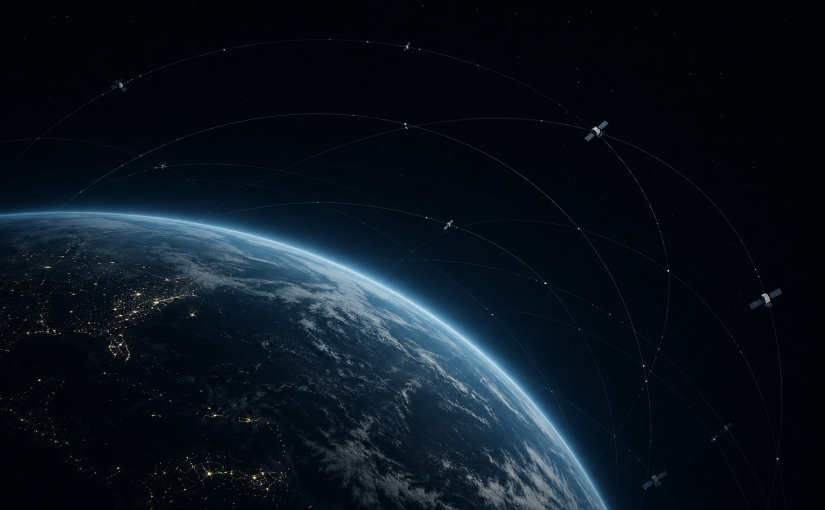
The rapid expansion of space activities is transforming outer space from a relatively accessible frontier into an increasingly congested operational environment. What was once dominated by two superpowers during the Cold War era is now occupied by numerous States, private operators, mega-constellations, scientific missions and commercial ventures. This growth has brought an unavoidable consequence: space debris. Sustainability in outer space governs this issue and wider emerging issues.
From defunct satellites and fragments from explosions or collisions, to abandoned rocket bodies and microscopic debris travelling at extraordinary speeds, orbital congestion has become one of the defining legal and operational challenges of modern space governance.
At the same time, missions venturing deeper into the solar system raise concerns regarding planetary protection and contamination of celestial bodies.
The legal question is therefore no longer whether sustainability matters in space activities, but whether the current international legal framework is capable of addressing these risks effectively.
The Outer Space Treaty: Broad Principles, Limited Specificity
The cornerstone of international space law remains the 1967 Outer Space Treaty (OST), often described as the “Magna Carta” of space law.
Although the Treaty was adopted at a time when space activity was limited, several of its provisions remain highly relevant to sustainability and debris mitigation.
Article I: Space for the Benefit of All
Article I guarantees the freedom of exploration and use of outer space for all States. However, this freedom is not absolute.
The Treaty frames outer space as the “province of all mankind”, implying that activities should be conducted in a manner that preserves access and usability for present and future generations.
This principle increasingly supports sustainability-oriented interpretations of the Treaty.
Article VI: Responsibility and Supervision
Article VI establishes that States bear international responsibility for national space activities, including those conducted by private entities.
This provision has become especially significant in the modern era of commercial space operations.
States are required to authorise and continuously supervise activities carried out under their jurisdiction. In practice, this enables debris mitigation measures to be incorporated into national licensing and regulatory systems.
Article VII and the Liability Convention
The liability framework established by Article VII OST and the Liability Convention creates indirect incentives for responsible conduct.
Launching States may incur liability for damage caused by their space objects. Although these provisions do not specifically prohibit debris creation, they reinforce the need for careful operational behaviour.
Article IX: Due Regard and Harmful Contamination
Perhaps the most important sustainability-related provision is Article IX OST.
States must conduct activities with “due regard” to the interests of other States and avoid harmful contamination of outer space and celestial bodies.
The provision also introduces consultation obligations where planned activities may create risks of harmful interference.
Although Article IX does not expressly regulate space debris, it increasingly serves as the legal foundation for sustainability discussions in international space governance.
The Limits of Hard Law in Space Governance
Despite the growing urgency of debris mitigation, the adoption of new binding treaty rules has proven politically difficult.
Space activities now involve a broad range of actors with divergent geopolitical, commercial and strategic interests. Achieving consensus on binding obligations has therefore become increasingly challenging. This has created a governance gap.
The existing treaties establish broad principles, but do not provide detailed operational standards for debris mitigation, remediation or space traffic management. As a result, international governance has increasingly relied on “soft law”.
Why Soft Law Has Become Central
Soft law instruments are non-binding frameworks, guidelines and standards that encourage coordinated behaviour without creating formal treaty obligations.
In the space sector, soft law has proven particularly attractive because of its flexibility.
Unlike treaties, soft law can evolve quickly alongside technological developments and industry practice.
Examples include:
- The IADC Space Debris Mitigation Guidelines;
- The UNCOPUOS Space Debris Mitigation Guidelines;
- The UNCOPUOS Guidelines for the Long-Term Sustainability of Outer Space Activities.
These instruments have become increasingly influential despite lacking binding force.
The Long-Term Sustainability (LTS) Guidelines
The 2019 UNCOPUOS Long-Term Sustainability (LTS) Guidelines represent one of the most important modern developments in international space governance.
The Guidelines seek to promote safe, sustainable and responsible space operations through international cooperation, information-sharing, capacity-building and technical coordination.
Importantly, they operationalise the broad obligations contained in the Outer Space Treaty.
The LTS Guidelines cover:
- policy and regulatory frameworks;
- safety of space operations;
- international cooperation and capacity-building;
- scientific and technical research.
They also encourage the development of Space Situational Awareness (SSA) capabilities and information-sharing systems that support emerging Space Traffic Management (STM) practices.
These mechanisms are increasingly critical to preventing collisions and managing orbital congestion.
Can Soft Law Become Binding?
One of the most fascinating aspects of international space governance is the gradual evolution of soft law.
Although guidelines are not legally binding in themselves, they may influence State behaviour over time.
Soft law can acquire legal significance in several ways:
1. National Implementation
States may incorporate international guidelines into domestic legislation, licensing systems and regulatory frameworks.
Once implemented nationally, these standards become binding on private operators.
2. Development of Customary International Law
Where consistent State practice is accompanied by a belief that such practice is legally required (opinio juris), soft law principles may gradually contribute to the development of customary international law.
Whether current debris mitigation practices have reached that threshold remains open to debate.
Nevertheless, soft law increasingly shapes expectations regarding responsible conduct in space.
Planetary Protection and COSPAR
Sustainability concerns are not limited to orbital debris.
As exploration missions extend to the Moon, Mars and beyond, planetary protection has become a critical component of space governance.
Planetary protection focuses on preventing:
- forward contamination (introducing Earth organisms to celestial bodies);
- backward contamination (bringing extraterrestrial material into Earth’s environment).
The Committee on Space Research (COSPAR) has developed the internationally recognised Planetary Protection Policy, which provides detailed contamination-control standards for space missions.
Although non-binding, the COSPAR Policy is widely treated as the operational standard for compliance with Article IX OST. It demonstrates once again how soft law fills the gaps left by broad treaty provisions.
The Future of Space Sustainability
The current space law framework reflects a broader structural reality: international space law remains heavily dependent on cooperation, evolving norms and soft law mechanisms.
At present, a rigid and comprehensive binding treaty regime for space sustainability may be politically unrealistic.
However, the growing congestion of orbital space and increasing reliance on space infrastructure will continue to intensify pressure for stronger governance mechanisms.
Future developments may include:
- stronger national debris mitigation regulation;
- enhanced international coordination mechanisms;
- operational space traffic management systems;
- harmonised technical standards;
- eventual codification of existing soft law principles.
The challenge facing the international community is therefore not simply technological. It is legal, political and institutional.
The sustainability of outer space ultimately depends on whether States and private actors are willing to treat the space environment as a shared domain requiring long-term stewardship rather than short-term exploitation.
Dr Geraldine Spiteri is the founder of Asteria Advisory, focusing on maritime, aviation and space law matters. This article forms part of Asteria Advisory’s ongoing commentary on emerging legal developments affecting international transport and space governance.
