Asteria Advisory – News & Updates

IATA World Legal Symposium 2026: Expanding Aviation Perspectives for Asteria Advisory

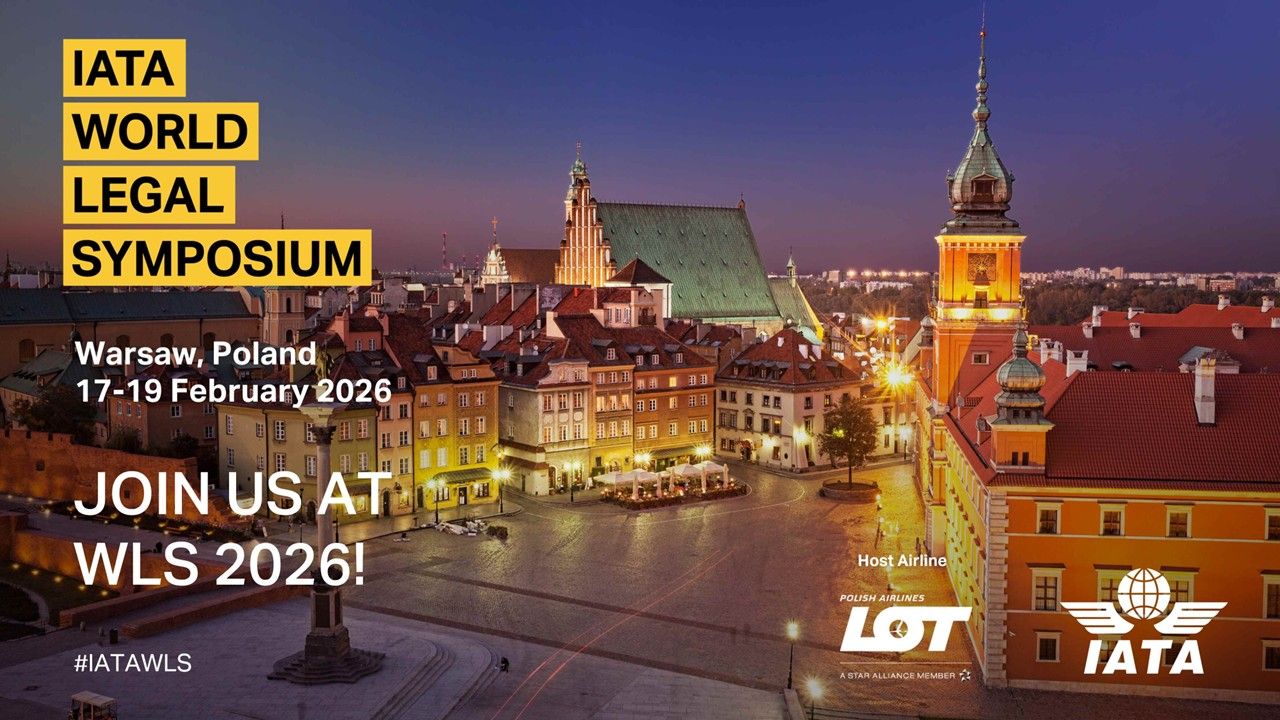
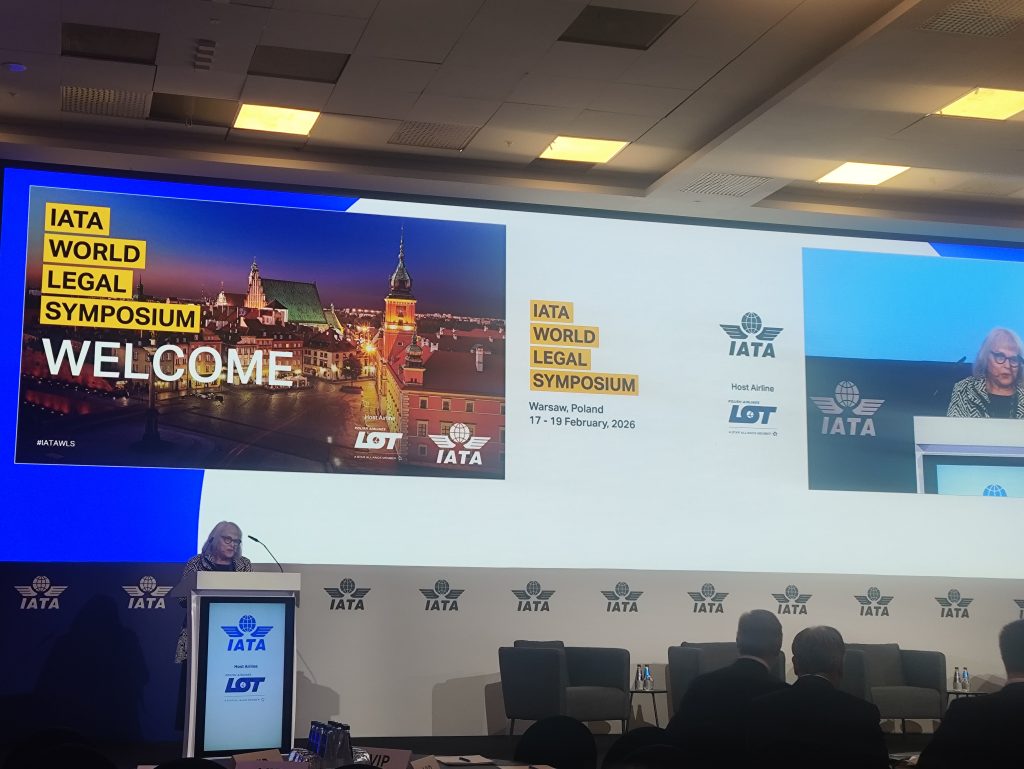
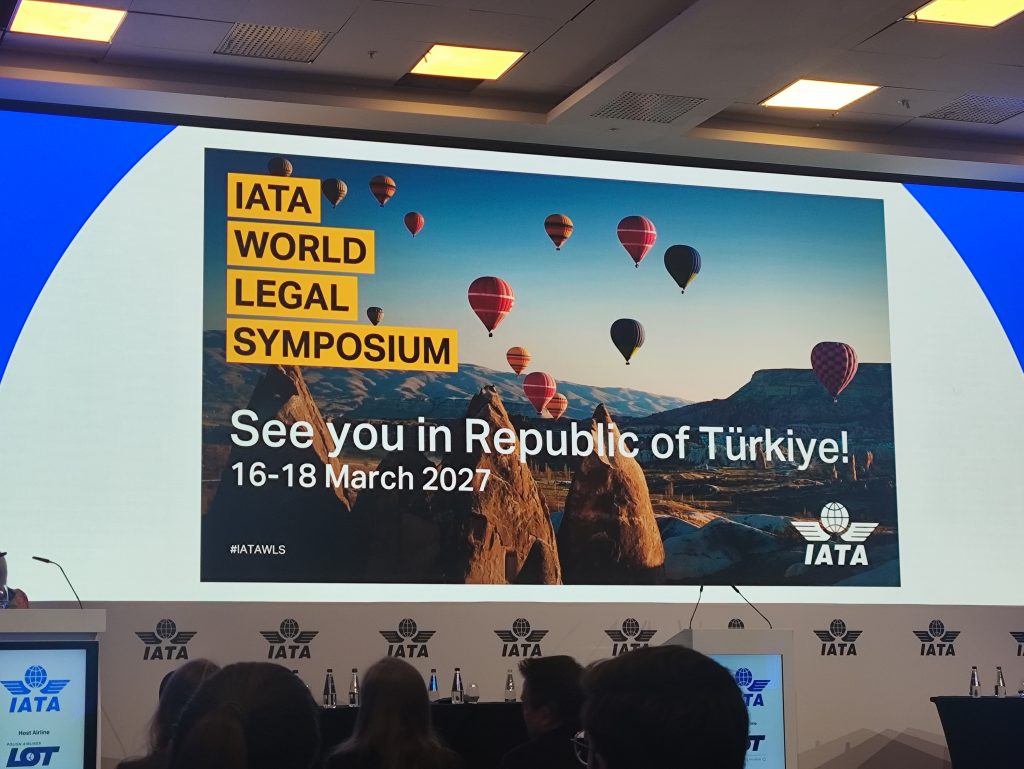
Attending the IATA World Legal Symposium 2026 in Warsaw as part of my advanced studies provided an opportunity not only for academic engagement, but also to broaden the practical perspectives informing the work of Asteria Advisory.

Participation in international industry dialogue remains an essential part of maintaining a forward-looking advisory practice.

Bringing together aviation lawyers, airline counsel, regulators, insurers, and aviation stakeholders from across the world, the symposium offered a unique environment where regulatory theory meets operational reality.

Global Aviation Conversations

The aviation sector continues to evolve under significant commercial and regulatory pressure. Discussions throughout the symposium reflected how legal frameworks must adapt alongside technological development, sustainability objectives, and changing geopolitical dynamics.

Key areas of discussion included:

  • competition and market access considerations;
  • sustainability obligations and environmental regulation;
  • liability allocation and risk management;
  • operational resilience and regulatory oversight.

Exposure to comparative regulatory approaches and international perspectives provides valuable insight into how jurisdictions respond differently to shared industry challenges.

Learning as Strategic Investment

For Asteria Advisory, continued professional development is not an isolated academic exercise.

Engagement with international forums allows the firm to remain connected to emerging regulatory trends and industry expectations. Understanding how airlines, regulators, and advisors approach evolving challenges helps inform practical solutions for clients operating across jurisdictions.

Participation through university collaboration also creates opportunities to build relationships within the wider aviation legal community — an increasingly important factor in cross-border advisory work.

Supporting Asteria’s Aviation Practice

As Asteria Advisory continues to develop its aviation and transport asset advisory work, exposure to global conversations strengthens our ability to anticipate regulatory developments rather than simply react to them.

Events such as the IATA World Legal Symposium reinforce the importance of collaboration between academia, industry and practitioners in shaping sustainable aviation frameworks.

Continuous learning ultimately serves one objective: ensuring that client advice remains informed by both legal developments and real-world industry experience.

Looking Ahead: Aviation Law in a Changing Regulatory Environment

Aviation continues to evolve under increasing regulatory, environmental, and operational pressures. Here, international dialogue plays a critical role in shaping practical legal solutions.

At Asteria Advisory, we continue to monitor developments affecting aircraft registration, operational structuring, regulatory compliance, and cross-border aviation activities.

Engagement with global industry forums helps ensure that advice remains aligned with emerging standards and the expectations of regulators, financiers, and operators alike.

About the Author

Dr Geraldine Spiteri is Founder and Principal Advisor at Asteria Advisory, advising on aviation, maritime and transport asset regulation, including aircraft and vessel registration, cross-border structuring and emerging space law frameworks. She is currently pursuing advanced studies in Air and Space Law at Leiden University.

Related Insights

AI in Aviation Ground Operations: Transformative Potential vs Operational Resilience

As AI embeds deeper into airport and aircraft systems, understanding failure modes is key to sustainable adoption

In 2026, artificial intelligence is no longer a peripheral experiment in aviation—it is becoming integral to ground operations, from gate assignment and taxi routing to predictive turnaround management and real-time resource coordination. AI in aviation ground operations is transforming efficiency in aviation operations.

Industry reports highlight AI’s ability to reduce departure delays, optimize fuel burn during ground movements, and enhance overall airport throughput, contributing to billions in potential annual savings across the global network.Yet this rapid integration brings new vulnerabilities. IATA’s 2026 risk assessments underscore converging threats: cyber exposure amplified by AI, over-dependency on digital systems, erosion of operational trust when outputs falter. The challenge of proving consistent productivity gains in safety-critical environments. Aviation’s deliberate pace—driven by rigorous certification and zero-tolerance for unmitigated risk—creates a natural tension with AI’s probabilistic nature.

Consider a realistic scenario in aircraft ground operations: an AI-enabled system supporting automated gate positioning, dynamic stand allocation, or coordinated turnaround sequencing encounters anomalous inputs. This could stem from sensor degradation in adverse weather, conflicting data streams from legacy and modern infrastructure, integration gaps between stakeholders, or edge cases not fully covered in training data.

The result? Misaligned recommendations that trigger gate backlogs, unnecessary aircraft repositioning, crew duty-time extensions, or cascading network delays. Such disruptions are rarely catastrophic in isolation, but they compound quickly: idling aircraft burn fuel, ground handlers face bottlenecks, passengers experience extended wait times or irregular deplaning processes, and connecting itineraries unravel.

Economic ripple effects follow—lost slots, compensation claims, reputational impact. These can also erode confidence in the very technology meant to deliver efficiency. Recent analyses from industry sources and observers note that while agentic AI and ambient intelligence promise proactive, autonomous orchestration, adoption remains constrained by the need for robust data foundations, clear governance, and human oversight.

Spotty results in early deployments often trace back to insufficient testing for black-swan conditions, inadequate fallback mechanisms, or underestimating the human factors in high-pressure decision loops.

Resilient Transformation – Key Points

  • Strong Data and Integration Foundations — Ensure clean, contextualized data flows across siloed systems (airport, airline, ground handler) to minimize misinterpretation risks.
  • Human-in-the-Loop Safeguards — Design AI as an augmentor, not replacer. Entities must provide transparent explanations, override options, and escalation paths for operators.
  • Rigorous Scenario Testing — Simulate edge cases (weather extremes, cyber events, partial failures) during certification and ongoing validation, aligning with EASA/ICAO emerging AI frameworks.
  • Phased, Modular Rollouts — Start with low-risk use cases, monitor performance metrics closely, and incorporate kill switches or graceful degradation modes.
  • Governance and Change Management — Build cross-functional teams to maintain trust, train personnel on AI limitations, and establish incident-sharing protocols to accelerate industry learning.

These principles are not theoretical. They are the difference between isolated pilots that fizzle and scaled deployments that deliver sustained value. Organizations that invest in resilience engineering upfront avoid the “big bets, big failures” pattern seen in some enterprise AI initiatives.

The liabilities can be enormous – ranging from customer complaints to severe damage to an infrastructure.

How can Asteria Advisory help?

At Asteria, we partner with leaders in high-stakes sectors to navigate exactly this balance. We provide legal support for people who are turning AI’s promise into reliable, auditable reality without compromising safety or operational integrity.

Whichever aspect of aviation, the goal remains the same—deploy intelligence that enhances decision-making, anticipates disruptions, and fails gracefully when needed. Legal arrangements backing this need to be watertight. Parties need to know their rights and obligations.

As aviation evolves toward more intelligent, connected operations in 2026 and beyond, the organizations that thrive will be those that treat AI as a disciplined, governed capability embedded within resilient processes. The responsibility needs careful management and liabilities need containing.

Reach out—we’d welcome the conversation.

The EU Space Act and Malta’s Growing Space Sector: Opportunity or Constraint?

On 25 June 2025, the European Commission published its proposal for a Regulation on the safety, resilience and sustainability of space activities, informally referred to as the EU Space Act. The public consultation opened on 15 July 2025 and continued until 24 November 2025.

If adopted, the Regulation would establish the first single EU-level framework governing space activities across Member States. For small jurisdictions such as Malta, this development raises both strategic opportunities and practical challenges.

The EU Space Act: A Single Regulatory Orbit

The proposed Regulation is structured around three core pillars:

  • Safety
  • Resilience
  • Environmental sustainability

The Commission has acknowledged that 13 different national approaches currently create fragmentation, additional compliance costs, and uncertainty for operators. The EU Space Act therefore seeks to harmonise rules on authorisation, registration, supervision, and market access in order to create a functioning single market for space services.

The proposal also introduces mandatory debris mitigation, post-mission disposal requirements, collision-avoidance data sharing, cybersecurity obligations aligned with existing EU resilience frameworks, and enhanced risk-management requirements.

The ambition is clear: Europe intends to position itself as a global standard-setter in space safety and sustainability.

Malta’s National Space Framework

Malta has not remained passive in this evolving landscape.

Through the Malta National Space Strategy, ratification of the European Space Agency (ESA) Plan for European Cooperating States (PECS) Agreement in June 2024, and the ongoing work on a Draft Space Activities Act, Malta has been actively building its domestic legal and institutional capacity.

The Draft Space Activities Act aims to establish:

  • Licensing requirements for space operators
  • Liability and safety provisions
  • Environmental safeguards
  • Supervisory mechanisms aligned with international obligations

At the same time, engagement with ESA has strengthened Malta’s administrative and technical capabilities. These steps signal a deliberate effort to position Malta as a niche but credible participant in the European space ecosystem.

Opportunities for Small Member States

For Malta, a harmonised EU framework may offer tangible benefits.

A single regulatory regime could reduce fragmentation and make it easier for Maltese-based startups and SMEs to scale across the EU market. Investor confidence may increase if authorisation and supervision follow common EU standards rather than diverging national approaches.

An EU-level framework may also strengthen Malta’s credibility when attracting space-related investment and services.

Risks and Implementation Challenges

However, harmonisation is not cost-neutral.

Several concerns have been raised by industry stakeholders:

  • The potential extra-territorial reach of the Regulation
  • The burden of compliance on SMEs and smaller operators
  • The reliance on delegated acts and technical standards to be adopted at a later stage
  • The risk that regulatory timelines may not align with innovation cycles

For smaller Member States, administrative and supervisory capacity is a central issue. Harmonised rules often require national authorities to implement and enforce authorisation and reporting obligations. Without proportionality and transitional support, compliance costs may disproportionately affect emerging ecosystems.

Malta’s competitive advantage has historically included regulatory agility. Harmonisation may reduce flexibility, even while increasing legal certainty.

A Strategic Moment for Engagement

The consultation period, open until 24 November 2025, represents a significant opportunity for Maltese stakeholders to engage constructively in shaping the final framework.

These issues are not merely theoretical. They are currently being debated across legal, regulatory and industry forums as the EU Space Act progresses through consultation.

I will be contributing to this discussion at an upcoming industry event, called ‘Space Data, Financial Futures: The New Frontier for Banking, Insurance and Law‘ and hosted by Xjenza Malta. We will be examining the implications of the EU Space Act for Malta and other small Member States. Such dialogue is essential to ensure that safety and sustainability objectives are met without imposing disproportionate burdens on emerging space ecosystems.

Space Activities Act for Malta will be discussed at the upcoming conference in Malta, including how to access the space industry and funding

Conclusion

The EU Space Act is a significant and welcome step toward addressing fragmentation in European space regulation. Its focus on safety, resilience and sustainability reflects genuine and pressing concerns in an increasingly congested and commercialised orbital environment.

For Malta, however, the Regulation presents a delicate balance.

It may enhance market access and investor confidence. Yet it may also introduce new compliance demands and reduce national regulatory flexibility.

The outcome will depend on how proportionality, transitional support, and capacity-building measures are embedded in the final text.

As Malta continues to develop its national space framework, the interaction between domestic legislation and EU-level harmonisation will shape the island’s role in Europe’s emerging space economy.

Asteria Advisory can support governments and economic operators in treading this delicate ground. Contact us for further information or a consultation.

About the Author

Dr Geraldine Spiteri is Founder and Principal Advisor at Asteria Advisory, advising on aviation, maritime and transport asset regulation, including aircraft and vessel registration, cross-border structuring and emerging space law frameworks. She is currently pursuing advanced studies in Air and Space Law at Leiden University.

Recognition of Qualifications – Marine & Aviation Professionals

I recently had an interesting exchange with Charles Pace, Malta’s Director-General for Civil Aviation and Transport at Transport Malta during a meeting of the Women in Aviation, Marine & Transport Malta. We discussed the recognition of qualifications and experiential training of marine and aviation professionals.

One issue stood out: some of the most safety-critical professions — such as aircraft pilots and maritime captains — accumulate years of highly structured, regulated training and operational experience, yet much of this expertise is not formally recognised within traditional education frameworks.

This also applies to training certified by international industry authorities in aviation and maritime sectors, global systems are shaped by UN-backed organisations such as International Civil Aviation Organization and International Maritime Organization. These standards keep global transport systems running — but often sit outside national academic recognition pathways.

Skilled professionals can be discouraged from further study or progression because they need to repeat learning they already master, or cannot access programmes at all.

In a digital, skills-driven era, professional development should not hinge solely on traditional certificates. Experience, regulated training, and demonstrable competence must form part of the recognition conversation.

There is room here for smarter bridges between industry qualification systems and education frameworks — and that conversation is long overdue.

About the Author

Dr Geraldine Spiteri is Founder and Principal Advisor at Asteria Advisory, advising on aviation, maritime and transport asset regulation, including aircraft and vessel registration, cross-border structuring and emerging regulatory frameworks.

Follow our News & Updates on this blog to hear more when something shifts in this field.

Amendments to the Companies Act

On 16 December 2025, several provisions of the Companies (Amendment) Act, 2025 entered into force in Malta by virtue of Legal Notice 286 of 2025. Alongside these legislative changes, the corresponding updates to statutory forms under the Companies Act were also effected through Legal Notice 287 of 2025.

The Malta Business Registry (“MBR”) recently communicated a notice describing these changes. It underscored important regulatory updates for companies, their officers, and corporate service providers.

What’s Now in Force

The specific amending provisions of the Companies (Amendment) Act that came into effect include several sections. While the full legislation covers a broad scope of corporate law modernisation, a key practical outcome of these changes is the simplified dissolution procedure for eligible companies.

New Simplified Dissolution Procedure

One of the most significant updates introduced by these amendments is the simplified dissolution procedure (new Article 214A of the Act). This new route allows certain companies that have not traded, hold minimal or no assets, and have no outstanding liabilities to apply for dissolution more efficiently; they will also face lower administrative burden compared to traditional winding-up processes.

To use this process, eligible entities must complete and submit prescribed forms through the MBR’s online system — BAROS (Business Automation Registry Online System) — rather than through manual filing.

Updated Forms and Filing Requirements

In parallel with the legislative enactment, the Companies Act (Forms) (Amendment No. 2) Regulations, 2025 (Legal Notice 287 of 2025) came into force. These regulations revise the statutory forms that correspond with the amended provisions of the Companies Act. They ensure that filing requirements align with the updated law.

The MBR encourages companies and their officers to consult the User Guidelines published alongside these Legal Notices. These provide practical assistance on the application and interpretation of the updated procedures and forms.

Practical Impact for Businesses

These changes mark a continued shift toward digital compliance, streamlined administrative procedures and modernised company law in Malta. The simplified dissolution process will be of particular interest to stakeholders looking for a cost-effective exit mechanism for dormant or inactive companies.

Companies and advisors should ensure they are using the latest statutory forms. Newnew applications must be submitted under the updated framework through the BAROS portal.

Any questions on complying with the new provisions may be directed to us through our Contact page.