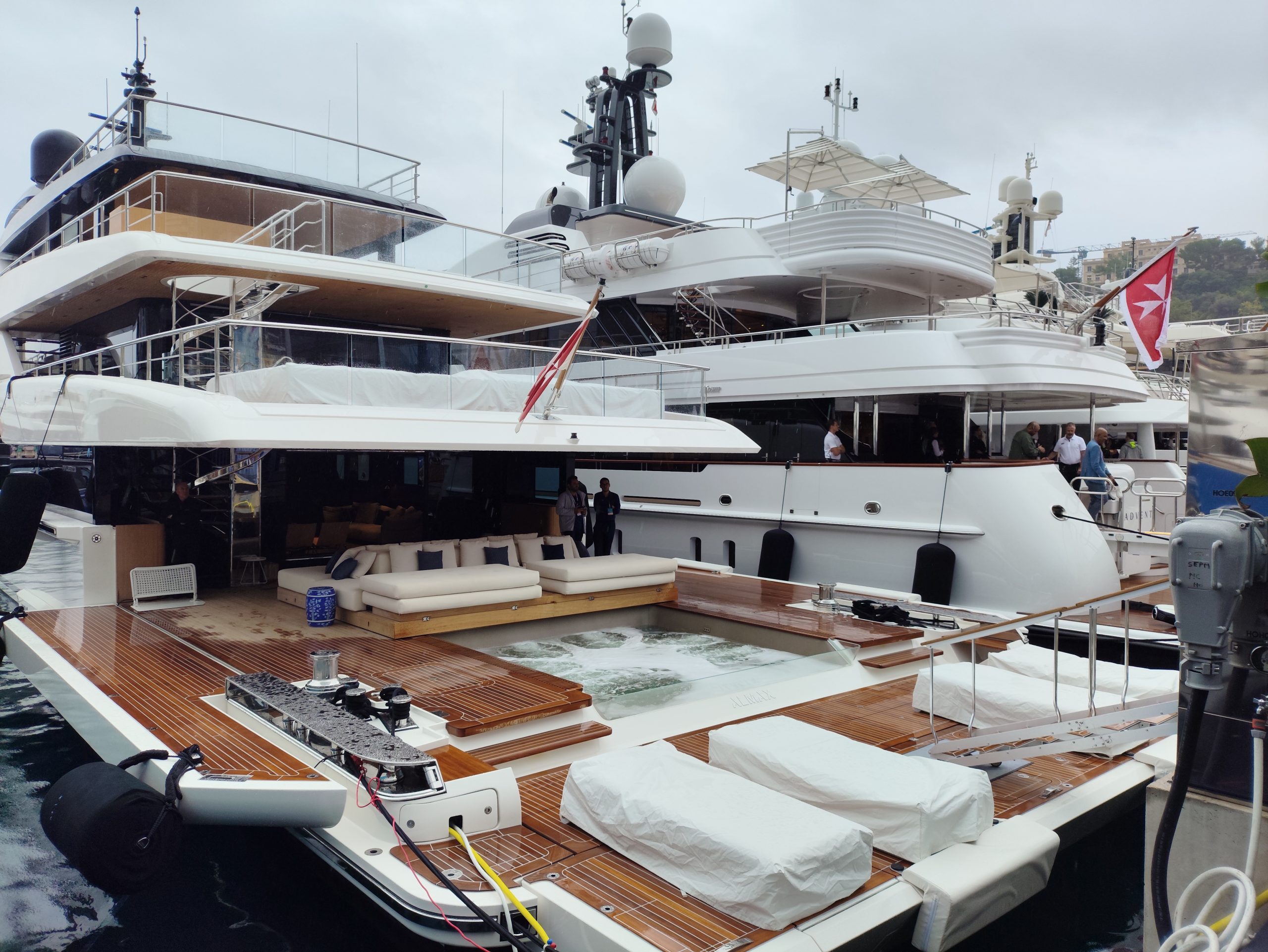
This month marks the first anniversary of Asteria Advisory, and I wanted to share a moment of reflection and gratitude.
Around one year ago, I decided to build a practice that aligned fully with my work in marine and aviation law, superyachts, business jets, merchant shipping, and the emerging field of air and space law. Asteria became the vessel for that vision — flexible, independent, and grounded in clarity and connection. I officially relaunched on the 28th March 2025.
Over the past months, Asteria has grown steadily through the trust of clients, the support of colleagues, and the opportunities that come from working in an industry as dynamic as ours. My academic work and lecturing continue to strengthen the advisory services I provide, allowing Asteria to bring both practical and research-driven insight to complex cross-border matters.
To everyone who has collaborated with Asteria this year — thank you. Your confidence and partnership have shaped the practice into what it is today.
As we move into the year ahead, I look forward to expanding Asteria’s work in marine and aviation operations, international registration, regulatory compliance, and space law developments, while continuing to build bridges between law, industry, and innovation.
Here’s to the next chapter. And to navigating it together.
VAT in superyachts was an exciting theme at the Barcelona conference Opening of the IATA World Legal Symposium 2026
Summer has arrived—and with it, the Mediterranean yacht charter season is in full swing. Ports are filling, crews are mobilised, and charters are underway. It’s a vibrant time, but also a demanding one. Asteria provides yacht charter season support to guide owners and operators through this busy time.
While guests enjoy turquoise bays and fine service, support teams work tirelessly in the background. Every successful summer on the water depends on expert planning and precise execution.
Why Behind-the-Scenes Support Matters
This is where yacht charter season support becomes essential.
Yacht managers and owners face tight schedules and increasing regulatory demands. Flag registration, crewing compliance, and documentation must be handled without delay. The smallest oversight can ripple into larger operational issues.
Having a reliable support team makes all the difference.
Asteria’s Role in Keeping Yachts Operational
At Asteria Advisory, we help our clients stay prepared. We offer:
Yacht and ship registration
Flag advice and administration
Corporate structuring for ownership
Crewing and compliance coordination
Documentation management for charters and operations
We understand how the marine environment works—because we’ve lived it, structured it, and supported it for years.
Our goal? To give owners, managers, and family offices peace of mind during their busiest season.
Building Bridges for a Successful Season
Our tagline, Building Bridges, reflects how we connect clients with the right solutions—across borders, time zones, and jurisdictions. Whether you’re preparing a vessel for charter or ensuring flag compliance mid-season, we’re here to help.
We work behind the scenes to support you during the yacht charter season so that your operations remain calm, clear, and compliant.
Wishing You a Smooth Season
To all our clients, collaborators, and colleagues in the maritime sector—we wish you a safe and successful summer. We have more updates coming – follow our Facebook and LinkedIn pages.
Let’s make this yacht charter season one to remember.
Transport Malta has issued a new Commercial Yacht Code, applicable as of the 01 July 2025. This comes after months consultation and effort to bring together an updated standard for the industry.
🛥️ Scope & Applicability
Applies to all commercial yachts over 24 m in length, with any gross tonnage, replacing CYC 2020.
Small Commercial Yacht Code (sCYC) remains in effect for yachts under 24 m.
🔍 Key Updates & Enhancements
1. Regulatory Alignment & Streamlining
Reflects international safety standards, updated technologies, and industry practices.
Aims to streamline the regulatory framework, making compliance more operationally effective.
2. Enhanced Safety Measures
Greater emphasis on safety systems, including improvements in navigation, firefighting, and structural integrity (though specific clauses are in the full Code).
3. Environmental & Operational Efficiency
Introduces stricter provisions on pollution prevention, waste handling, and fuel safety for onboard aviation refuelling, reflecting modern environmental best practices.
4. Technological Advancements
Broadened acceptance and specific requirements for battery-powered and hybrid vessels, with mandatory classification throughout certification.
Updated provisions for helidecks, including CCTV coverage and fuel handling protocols.
5. Surveying & Certification Regime
Maintains existing structure: initial, intermediate, and annual surveys for vessels ≥ 24 m, renewing every five years.
Potential allowance for alternative compliance agreements, enhancing flexibility.
6. Crew & Operational Management
While details are in the Code, improved clarity is suggested for manning, training, and crew welfare.
🧭 Why This Matters
Regulatory consistency: Harmonises Malta’s code with global standards and advances in marine design.
Ongoing compliance: Existing vessels are given a clear update pathway, minimizing disruptions.
Environmental leadership: Demonstrates Malta’s dedication to marine ecology through enhanced pollution controls.
Tech readiness: Encourages adoption of eco-friendly propulsion and modern safety systems.
✅ What You Should Do:
Familiarize yourself with the full CYC 2025 document, especially chapters relevant to safety, environment, and systems integration.
Schedule your vessel’s first renewal survey after 31 Dec 2025 to ensure compliance.
Discuss with your surveyor/RO about updated battery and helideck requirements, classification needs, and operational policies.
Asteria is attending 7th CAMS Conference, being held in Malta and organised by Aeropodium.
CAMOs operate at the intersection of operational responsibility and legal accountability. While their goal is technical—ensuring ongoing airworthiness—their playing field is deeply shaped by an ever-evolving regulatory framework.
Dr Geraldine Spiteri is moderating the conference, which will deal with data issues, rethinking CAMO operations, director responsibilities and much more. She will be presenting on key challenges facing CAMO, focussing on regulatory challenges.
Watch this space for an update on the information shared during the conference.
Originally published in 2021 The applications of blockchain technology in logistics and business operations were just emerging in 2021. Here’s how it started — and why it’s still relevant today.
How is blockchain technology making businesses more efficient, competitive, and secure? In this article, we explore how it transforms inventory tracking, payment processing, and the global supply chain — the backbone of modern commerce.
Blockchain in your Business is an important asset
Adapting to Evolve
To survive and thrive, companies must adapt to evolving market demands and adopt innovative technologies. Blockchain is one such solution — offering the potential to streamline processes, enhance transparency, and solve persistent issues in logistics, administration, and security.
What is Blockchain Technology?
Often referred to as a “disruptive force,” blockchain technology is a decentralized, distributed digital ledger powered by cryptography. Operated by a global peer-to-peer network, it enables data to be recorded in secure, immutable blocks connected in a chronological chain.
This structure means that tampering with one block would require altering the entire chain — a near-impossible feat — thereby making blockchain one of the most secure and trustworthy data technologies available.
Why Blockchain Matters in Business Logistics
Today’s supply chains span multiple jurisdictions, involving a complex web of vendors, transport hubs, and financial transactions. Blockchain can help modernize this ecosystem by:
Improving traceability and transparency
Reducing fraud and administrative errors
Speeding up transactions and reducing costs
Creating trust in multi-party systems
Let’s explore how it works in real-world business logistics.
1. Settling Payments
Companies often experience long delays — averaging 42 days — to receive invoice payments. Paper-based documentation and human error further inflate administrative costs.
Blockchain-powered platforms enable businesses to settle payments through Smart Contracts, which self-execute once pre-defined conditions are met. These digital agreements eliminate the need for intermediaries, reduce delays, and cut down administrative overheads.
2. Inventory Tracking
Inventory management is critical to a company’s efficiency and profitability. Blockchain enables granular visibility over supply chains — allowing businesses to track individual items from origin to destination with improved precision and minimal error.
In the event of a product defect or recall, affected batches can be swiftly identified without disrupting the entire inventory.
3. Security
In a digital-first world, security threats like ransomware, theft, and fraud are real concerns. Blockchain offers superior security through:
Decentralized data storage
Advanced encryption
Smart contract automation
These tools help businesses protect sensitive data and reduce exposure to third-party risk.
4. Reliability & Transparency
One of the most valuable aspects of blockchain is that it reduces reliance on intermediaries. With immutable ledgers and transparent transactions, disputes can be resolved without external audits, and trust is built between stakeholders.
Is Blockchain Right for Every Business?
While blockchain offers significant benefits, its adoption comes with challenges:
Complex integration with legacy systems
Risk of data loss if encryption keys are misplaced
Inflexibility due to immutable records
Still, for companies seeking long-term gains in efficiency, security, and transparency, blockchain is proving to be a worthwhile investment.
Looking Ahead
From inventory tracking and payment automation to reducing friction in the global supply chain, blockchain continues to redefine how businesses operate. As adoption grows, companies that implement blockchain solutions are likely to enjoy a competitive edge in terms of speed, reliability, and trust.
Contact us if you have queries regarding setting up your business. We can also help you to access the right networks to work with blockchain technology.
Asteria offers a broad range of services for businesses, be it re-domiciliation or management services. This helps to ensure that Malta continues to attract international companies seeking a stable, business-friendly jurisdiction within the EU. Whether you’re relocating for strategic, regulatory, or operational reasons, the redomiciliation of companies to Malta offers a practical solution without the disruption of winding down and starting anew.
What Is Redomiciliation?
Redomiciliation is the process by which a company changes its jurisdiction of incorporation while maintaining its legal identity. In Malta, this is governed by the Continuation of Companies Regulations, which allow foreign-registered entities to continue operating locally without dissolving and re-incorporating.
This process ensures that companies can retain their existing structure, assets, and contractual obligations—minimising business disruption while benefiting from Malta’s competitive corporate framework and robust legal system.
Why Choose Malta for Corporate Redomiciliation?
Malta offers an attractive proposition for businesses across multiple sectors. Its EU membership, strategic location, strong financial and regulatory infrastructure, and competitive tax environment make it a prime choice for redomiciliation.
Whether you’re a commercial enterprise, holding company, or consultancy firm, relocating to Malta can offer significant long-term advantages.
Asteria Advisory: Your Partner for Seamless Relocation
At Asteria Advisory, we provide expert legal services and consultancy to companies seeking redomiciliation to Malta. Our legal advice is tailored to each client’s business needs, ensuring full compliance with regulatory requirements and a smooth transition throughout the process.
Working in close collaboration with a trusted network of professionals, we support our clients from the initial planning stage to final registration—handling all documentation, communication with the relevant authorities, and post-registration formalities.
Our Services Include:
Legal advice on eligibility and suitability for redomiciliation
Preparation and review of statutory documentation
Liaison with regulatory authorities
Company registration and compliance support
Ongoing corporate and commercial legal consultancy
Ready to Redomicile? Let’s Talk.
If your company is considering a move to Malta, Asteria Advisory can help make the process efficient, compliant, and hassle-free.
📩 Contact Asteria Advisory today to learn more about our redomiciliation services and how we can support your corporate journey in Malta.
Asteria Advisory is pleased to announce its official launch as a boutique legal practice. Areas of specialisation include marine and aviation law, as well as tailored commercial legal services. With a commitment to Building Bridges, Asteria Advisory connects clients with the legal solutions, industry professionals, and opportunities necessary for success.
Asteria Advisory was formerly operated as a corporate services provider under the name of Asteria Management Limited, which is no longer in existence.
The firm is managed by Dr Geraldine Spiteri, founder, who is also a Malta-warranted advocate of 20 years’ standing.
Legal Solutions That Move Your Business Forward
With a strong focus on the maritime and aviation law sectors, Asteria Advisory provides expert legal guidance in ship, yacht and aircraft registration, asset management, regulatory compliance, and business setup. Whether working with shipowners, operators, investors, or aviation professionals, or helping the yacht or jet owner to manage the needs of these highly specialised assets, we ensure a seamless and efficient approach to navigating complex legal and regulatory frameworks.
We also provide general legal, advisory and consultancy services to businesses.
📅 Official launch: March 28, 2025—a strategic date chosen to mark a new chapter of growth and opportunity.
Clients and industry professionals are invited to connect and explore how Asteria Advisory can provide expert guidance in the marine and aviation sectors.
🔹 For inquiries: Speak to Dr Geraldine Spiteri – gs@asteria.mt – or use our Contact form.
🔹 For Updates: We will continue to update our news feed with posts of interest.
The Women in Aviation Malta (WIAM) is a team of experienced aviation ladies operating in the Maltese aviation industry . The organisation was founded by Ms Ruth Sawers.
Every month, members gather at an event where they network, exchange ideas and of course, socialise. On Friday 21st March, we attended our first WIAM event for 2025, hosted by Boston Link. The theme focussed very much on career development in the aviation industry. Rozina from the Garage gave an insightful presentation and involved participants in some thought-proviking tasks. Yuliia from Link Talent also shard some top tips for career seekers and employees alike.
Dr Geraldine Spiteri discusses some ideas on career development in aviation
Attendees explored the pre-conceptions that might affect career choices or progress. The meeting also explored breaking barriers to reach new career heights.
The aviation industry has long been male-dominated, but recent initiatives are driving greater female participation, particularly in business aviation. Breaking these long-standing perceptions is essential for fostering growth and creating a more inclusive workforce.
Organizations like WIAM are leading the way, providing career insights and advocating for equal opportunities for women in aviation to thrive and advance in their careers.
Expert Legal Solutions for Aircraft Owners and Business Aviation
Navigating the complexities of business aviation requires expert legal support. This is especially true for aircraft owners managing business jets and private jets.
Asteria Advisory specializes in aircraft registration, asset management, and regulatory compliance. We aim to ensure a seamless experience for our clients.
With expertise in luxury assets, we provide tailored legal solutions designed for clients seeking to protect and optimize their investment.
For more information, contact us and we will get back to you as soon as we can.
Asteria Advisory is pleased to announce its participation in the 14th Annual Mediterranean Business Aviation Conference (MBAC).
The event will be hosted by Aeropodium in Malta on March 28th, 2025. It will be held at the Grand Excelsior Hotel. Participants will have the opportunity to network with like-minded professionals.
This prestigious conference brings together industry leaders, legal experts and key stakeholders in the aviation sector. Discussion panels will discuss the latest trends, regulatory developments, and opportunities shaping the industry.
The MBAC is designed for manufacturers, operators, and industry organisations. The agenda includes robust discussions, analysis of the latest developments, exploration of the regional air taxi market, scrutiny of diverse business models and insights into regional infrastructure advancements.
Asteria Advisory is committed to staying at the forefront of industry developments. Our mission is Building Bridges – fostering valuable connections and providing clients with cutting-edge legal insights.
Asteria’s founder, Dr Geraldine Spiteri, will be moderating the discussions. Expert speakers from well-established and experienced professional backgrounds have confirmed their participation.
📍 Event Details: 📅 Date: March 28,2025 📌 Location: Malta – The Embassy Hotel. Valletta. 🎤 Hosted by: Aeropodium
For those wishing to attend the conference, you may book online.
🔹 For inquiries or to schedule a meeting: head over to our Contact Page. 🔹 Learn more about the conference:click here.
Stay tuned for insights and key takeaways from the event!
The Occupational Health & Safety Authority (OHSA) has recently issued a leaflet to outline the basic tenets of the new law. In case you missed it or are not in Malta, here are the key points.
Every worker counts and every worker can contribute to the safety and security of the place they work in. The main objectives of the new law are the following:
Protecting mental and physical health of workers across all sectors
Implementing stronger measures and mechanisms
Fostering a prevention culture among workers and employers alike
Key responsibilities:
Responsibilities of the OHSA
Allocating more resources to operate effectively
Enhancing skills and competences of its own workforce
Introducing new legal measures for rapid intervention in high-risk situations
Modernising operational procedures for more effective oversight
Health & Safety Responsible Officer – when neccessary to receive reports and investigate, ensuring access for workers to continuous support at the workplace
Conducting life consultations nationwide to ensure sectoral improvements.
Employer Liability
Risk and hazard identification
Assesment of impact of risks on workers’ health
Implementing necessary mesures to elimitate or control risks to workers’ health
Provide appropriate training and information to workers, based on their role
Ensuring competent supervision
Employees’ Responsibilities
Cooperate with employer & team
Proper use of equipment supplied
Reporting of hazards
Engaging in continuous training
Adopting correct behaviour that does not endanger the team and themselves.
The OHSA offers a helpline – 158 – for more information or any difficulties.
If you are an employer seeking to draft your policies and procedures from this perspective and require assistance, contact us for a consultation. We can provide assistance with preparing your handbooks, policies and procedures, or provide a review based on the size of your operation and workforce.