Bridging Earth and Space: Reflections from Leiden
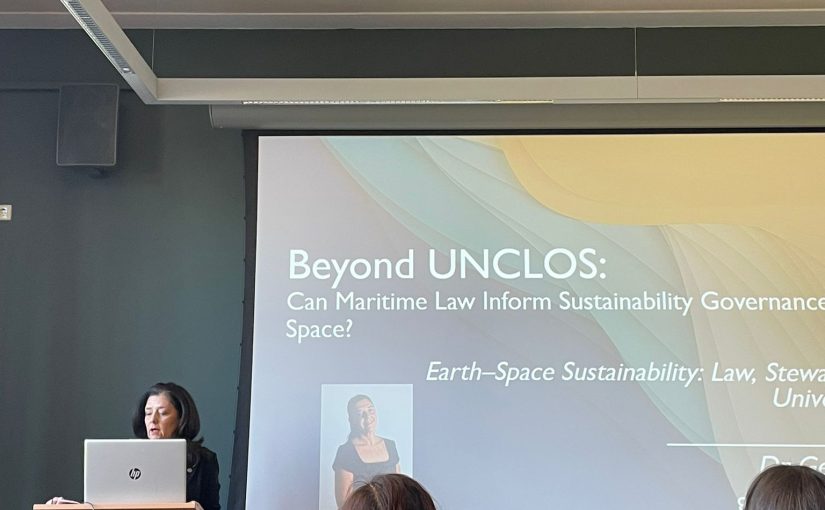
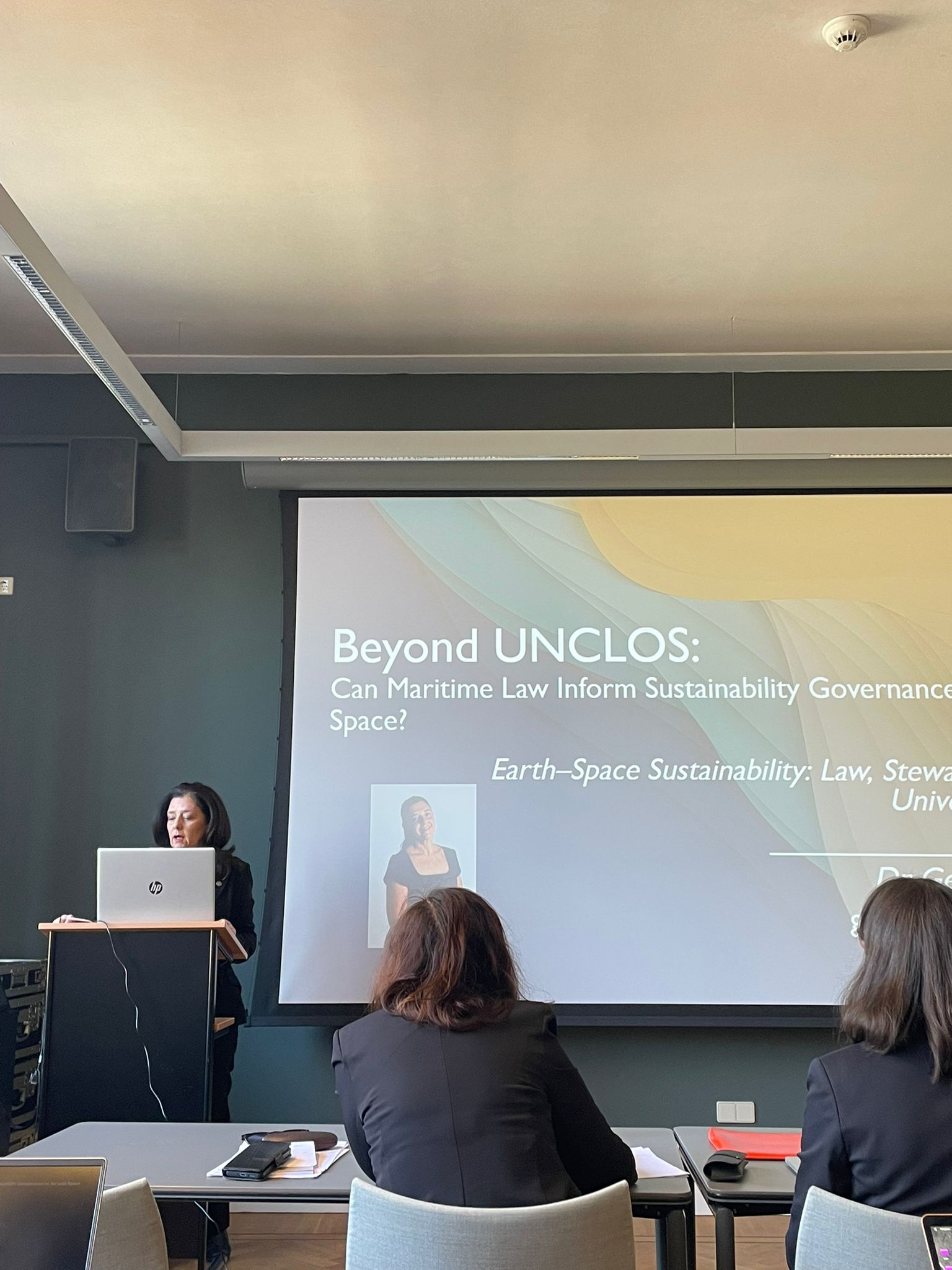
Earlier this month, I had the privilege of attending and presenting at the Earth–Space Sustainability Conference hosted by Leiden University. The conference brought together legal scholars, policymakers, scientists, and industry professionals to explore one of the most pressing questions of our time: how do we ensure that the expansion of human activity into space remains sustainable, responsible, and equitable?
Set against the historic backdrop of Leiden, the discussions were anything but abstract. They were grounded in urgency, shaped by rapid technological advancement, and framed by a growing recognition that space is no longer a distant frontier — it is an operational domain.
The Governance Gap: A Familiar Story
A central theme emerging from the conference was the governance gap in outer space. As satellite constellations expand and orbital congestion increases, existing legal frameworks — many drafted in a different geopolitical and technological era — are being stretched beyond their original design. This is not unfamiliar territory.
From a maritime perspective, we have seen similar tensions before. The development of the law of the sea, particularly under frameworks such as United Nations Convention on the Law of the Sea, reflects a gradual but necessary evolution from fragmentation to structured governance.
The question now is whether space law will follow a similar trajectory — or whether it will require entirely new models of cooperation and enforcement.
Due Regard and Shared Responsibility
In my presentation, I explored how principles such as “due regard” — well-established in maritime law — may offer a conceptual bridge for addressing competing uses of outer space.
Outer space, much like the high seas, is a domain where multiple actors operate simultaneously, often with overlapping interests and limited coordination. The challenge lies in balancing freedom of use with responsibility towards others, including future generations.
There is also a growing narrative around “common concern of humankind”, echoing broader environmental and sustainability discussions. While not yet crystallised into binding obligations in space law, this concept signals a shift: from sovereignty-driven activity to stewardship-driven governance.
From Theory to Practice
What made the conference particularly compelling was its interdisciplinary nature. Scientists spoke of orbital debris and planetary protection. Lawyers debated liability, jurisdiction, and enforcement. Industry participants highlighted operational realities and commercial pressures.
The takeaway is clear: space sustainability is not a purely legal problem. It is a systems challenge requiring alignment between law, technology, and policy.
For practitioners, this raises important considerations:
- How do we translate evolving principles into practical compliance frameworks?
- How do we ensure that innovation does not outpace regulation to the point of systemic risk?
- And how do we maintain a balance between accessibility and accountability?
Why This Matters for Asteria Advisory
At Asteria Advisory, the convergence of marine, aviation, and space law is not theoretical — it is increasingly operational.
The same clients navigating ship and yacht registration, aircraft operations, and cross-border regulatory frameworks are now also looking upward. The boundaries between sectors are becoming more fluid, and so too must the legal and advisory services that support them.
Attending and presenting at the Earth–Space Sustainability Conference reinforced the importance of staying ahead of these developments. It also reaffirmed a core principle behind Asteria: building bridges between legal domains, industries, and emerging frontiers. The Conference paper and report are published here.
Looking Ahead
The conversations in Leiden will not end there. They form part of a broader, ongoing dialogue on how we govern shared domains — from the oceans to the skies, and now into space.
For Asteria Advisory, this is an area of continued focus. As legal frameworks evolve, so too will the need for clear, practical guidance that aligns innovation with responsibility. The horizon is expanding. And with it, the need for thoughtful, connected, and forward-looking legal practice.

