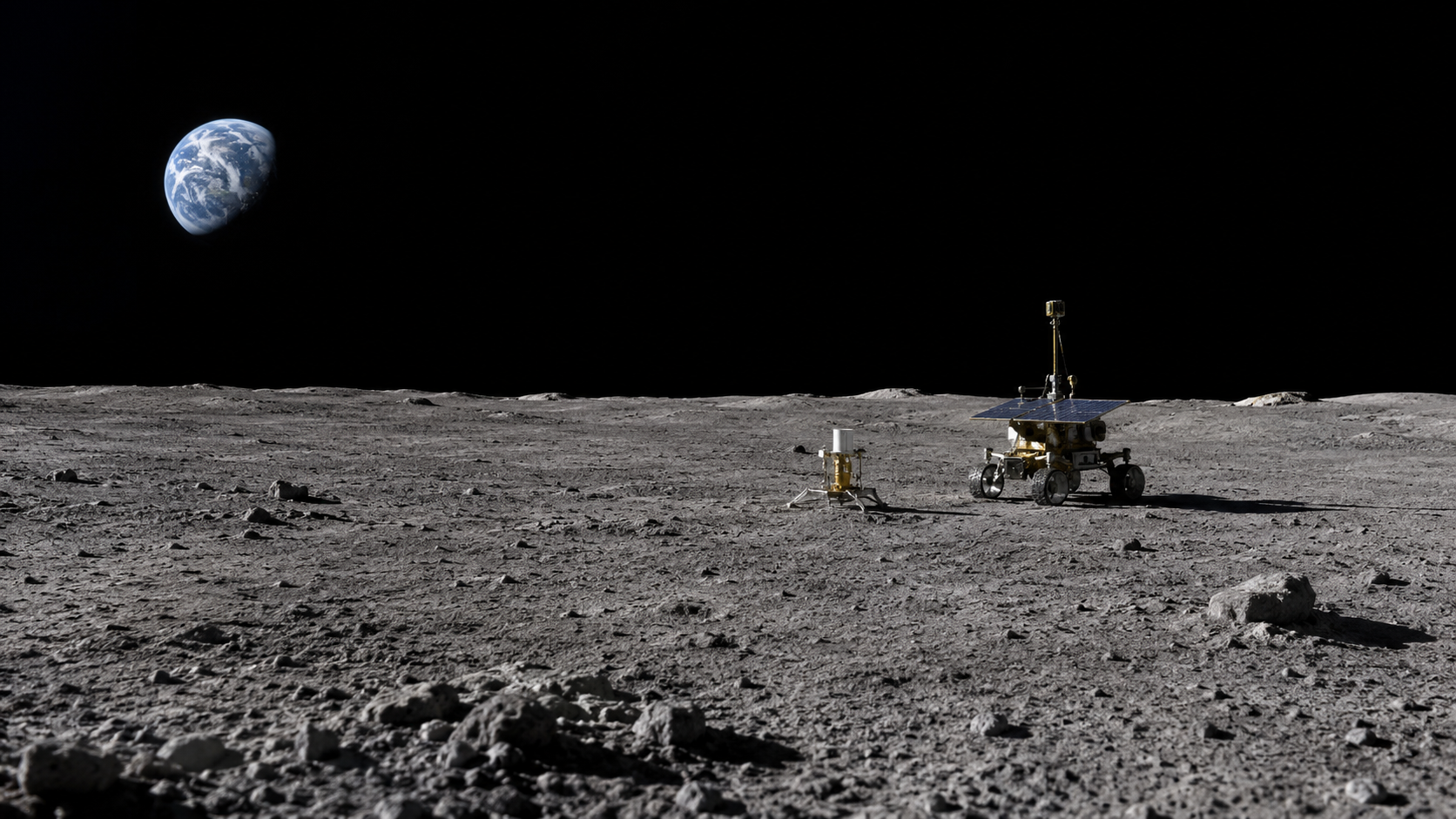
International Moon Day, observed annually on 20 July, marks the anniversary of the first human landing on the Moon in 1969. However, it also invites us to look forward.
The 2026 theme, “One Moon, One Vision, One Future,” reflects a changing reality. The Moon is no longer solely a destination for scientific exploration. States and private operators are preparing missions involving research, infrastructure, communications, resource utilisation and, eventually, a sustained human presence.
As lunar activity accelerates, international governance must keep pace.
The legal foundations of lunar activity
The 1967 Outer Space Treaty remains the foundation of international space law. It provides that the exploration and use of outer space must benefit all countries. It also establishes freedom of exploration and scientific investigation.
Crucially, no State may appropriate the Moon through a claim of sovereignty, occupation or any other means. The Moon must also be used exclusively for peaceful purposes.
The Treaty requires States to conduct their activities with due regard for the interests of others. Where a planned activity could cause potentially harmful interference, international consultation should take place.
These principles were drafted long before the emergence of today’s commercial space sector. Nevertheless, they continue to govern modern lunar ambitions.
Private operators also remain connected to State responsibility. Under Article VI of the Treaty, States must authorise and continually supervise the space activities of their non-governmental entities. Commercial activity on the Moon therefore does not take place in a legal vacuum.
Lunar resources and the need for legal certainty
The Moon contains resources which could support future missions. Water ice may potentially provide oxygen and rocket propellant, while lunar materials could support construction and other activities.
However, the legal position remains unsettled.
The Outer Space Treaty prohibits appropriation of the Moon but does not expressly determine whether the extraction and ownership of particular resources amount to appropriation. The 1979 Moon Agreement addresses natural resources more directly and envisages an international regime for their exploitation. However, it has attracted limited participation.
Meanwhile, several States have adopted national laws recognising rights over extracted space resources. The non-binding Artemis Accords also distinguish resource extraction from a claim of sovereignty.
These developments may encourage investment, but national legislation cannot settle the interpretation of international law for the wider international community.
In response, the Legal Subcommittee of the United Nations Committee on the Peaceful Uses of Outer Space established a working group in 2021 to examine potential legal models for space-resource activities. Now known as the Working Group on Legal Aspects of Space Resource Activities, it has been considering the existing framework and developing recommended principles.
Consultation before conflict
Governance involves more than determining ownership.
Multiple missions may seek access to the same scientifically or operationally valuable locations, particularly near the lunar south pole. Activities may also create dust, communications interference or physical disruption affecting other operators.
In 2024, COPUOS established the Action Team on Lunar Activities Consultation, or ATLAC. Its work focuses on international consultation, capacity-building and avoiding harmful interference.
This approach recognises that early communication and information sharing may prevent operational problems from developing into legal or political disputes.
Building the rules before they are needed
The experience of Earth orbit demonstrates the cost of allowing governance to lag behind activity. Congestion, debris and competing interests are considerably harder to address after they have become embedded.
The Moon offers an opportunity to act earlier.
A sustainable framework must protect scientific access, significant lunar sites and the interests of future generations. At the same time, it must provide sufficient legal certainty for responsible commercial and governmental activity.
“One Moon, One Vision, One Future” is therefore more than a commemorative theme. It is a call for cooperation.
Humanity’s return to the Moon will test not only its technology, but also its ability to create rules before competition becomes conflict. The Moon belongs to no State. Its peaceful and sustainable future is a responsibility shared by all.